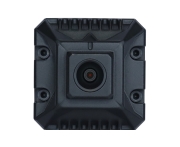
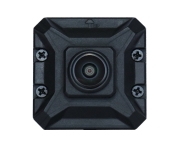
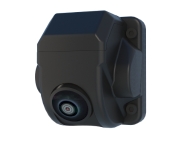
OVERVIEW

Without or with only slight changes on the hardware, the Standard Products can adopt various detection algorithms as sub-models to adapt for different functions.

Blind Spot & Rear View VRU Detection

Pedestrians and cyclists (with normal angle camera or Bird-Eye-View camera)

Forward Collision Warning & Side Blind Spot Detection

Vehicle Detection (with normal angle camera or Bird-Eye-View camera)

Lane Departure Warning

Lane Detection (with normal angle camera or Bird-Eye-View camera)

Driver-Status-Monitoring, Distracting-Fatigue Detection

Driver's face, eyes, mouth, safety belt, and mobile phone

Drivable Area Segmentation

with normal angle camera or Bird-Eye-View camera

Semaphore Checking

Train Driver's hands and arms

Public Service,Industrial, and Agricultural application

Pedestrian in complex environments

Special application

Pedestrian in forests and jungles

  • ● Level1 & Level2 Driving/Operating Assistant System

  • ● Applied on big machines and vehicles

  • ● Systems consist of the host, cameras, optional Radar and LiDAR, and peripherals

  • ● To detect Vulnerable Road Users (VRU), vehicles, lanes, and other potential risks in your blind spots and around your car. Triggers the alert and/or stops machine

  • ● To assist the drivers, but not replace them

  • ● OTA upgrade, remote maintenance, remote setting, report and video uploaded to the cloud, camera live view

Rigorous Development Verification Tests Guarantee Excellent Working Performance In Various Operating Environments


THE MAIN UNIT

The Main Unit, also called the Host or the Box, is the ‘brain’ of the system.

The algorithms to detect objects, the strategies to decide when and how to take action to avoid a risk, the codes to manipulate the vehicle, and other software are all in the Main Unit. The cameras, sensors, and peripherals are to be connected to the Host.

Most cameras and peripherals are compatible with all models of Main Units, meaning they can work with all models of Main Units. However, some cameras and peripherals are particularly developed for certain Main Units and cannot work with others. To learn more, please check the ‘Compatibility Table’ below.

Vis Has Three Series Of Main Units:The I Series,The G Series,And The V Series.The Three Product Families Are At Different Industrial Grades,Thus For Different Markets.The Table Below Depicts The Differences
24

FUNCTION LIST OF MAIN UNITS


I68

I SERIES

Specifications

  • Working Voltage: DC +9 ~+32V
  • Working Current: <= 2400mA@12VDC, or <= 1400mA@24VDC
  • Outer Size: 230 X 188 X 45 mm
  • Standard Operating Temperature: -20~+75℃/-40~+85℃
  • Storage Temperature: -40~125°C
  • Waterproof: IP66
FEATURES
  • Automotive Grade

    Perfectly meet OEM standards. Main chip certified with AEC-Q100.

  • Super Accurate HFR Algorithm

    99.68% True Positive (TP) rate and 0.32% False Positive (FP) rate, in real typical application.

  • 360° AVM

    3D view with super long distance, 2D top view, Automatic Calibration in minutes by AI, simplifying the calibration process.

  • Over-The-Air (OTA) upgrade

    Upgrade the Human Form Recognition algorithm by 4G wireless.

  • Internet Of Vehicle (IOV)

    GPS tracking, remote setting, event and footage uploading.

  • Sensor Fusion

    LiDAR interface Reserved. With optional signal-level fusion camera-LiDAR kit.

  • Water-Proof

    IP66 rated main host.

  • Works with Existing Cameras

    Supports PAL, NTSC, AHD, IP cameras (ISO17215), and private protocols.

  • Wide Range of I/O interfaces

    T1/TX Ethernet X 2, GPIO X 6, CAN X2

BENEFITS
  • BSD + 360° AVM in One System
  • High Compatibility with Existing Cameras
  • Easy and Quick Installation on Any Vehicle/Machine
  • Data Management for Better Operational Visibility
  • Customization Capability
  • IP Rating for Main Host and Peripherals

G SERIES

The G Series is for the professional after market. The G System reach an excellent balance between performance and cost. The G Series has two models: G4 and G3. Without or with only slight changes to the hardware, the G series can adopt various detection algorithms as sub-models to adapt to different functions.

  • Host + 2 camera
  • Working Voltage: Dc +9~+32V
  • Protection Voltage: lower than 9V
  • Quiescent Current: <=100uA
  • Working Current: <=1200mA@12VDC or 700mA@24VDC
  • Outer Size: 145.0 X107.0 X28.0 mm-20~+75°C
  • Operating Temperature: -40~125°C
  • Host + 4 camera
  • Working Voltage: DC +9 ~+32V
  • Protection Voltage: lower than 9V
  • Quiescent Current: <=100uA
  • Working Current: <=1800mA@12V
  • Outer Size: 217.00X205.50 X41.00 mm
  • Operating Temperature: -20~+75°C
  • Storage Temperature: -40~125°C

FUNCTION LIST OF MAIN UNITS


V SERIES

Entry-Level Aftermarket Solution

The V6 system is a compact, edge-computing device with an integrated camera, chips, and circuits housed within a single enclosure, simplifying installation. Although the V6 features a narrower operating temperature range compared to the G and I Series, which slightly impacts its detection capabilities, it remains an optimal choice for cost-effective, DIY installations.

Supporting up to four units, the V6 can establish a basic multi-camera network. In comparison, the G and I Series support more complex configurations, including additional sensors, peripherals, Over-the-Air (OTA) updates, and remote vehicle control.

With its competitive cost and performance, the V6 offers exceptional value in the entry-level aftermarket segment.

  • EDGECOMPUTING(host+cameraintegrated in same case)
  • Working Voltage: Dc +9 ~+32V
  • Protection Voltage: lower than 9V
  • Quiescent Current: <=100uA
  • Working Current: <=500mA@12VDC or400mA@24VD
  • Outer Size: 93.0 x 53.5 X72.0 mm
  • Operating Temperature: -20~+70*C-40~125°C

CAMERA

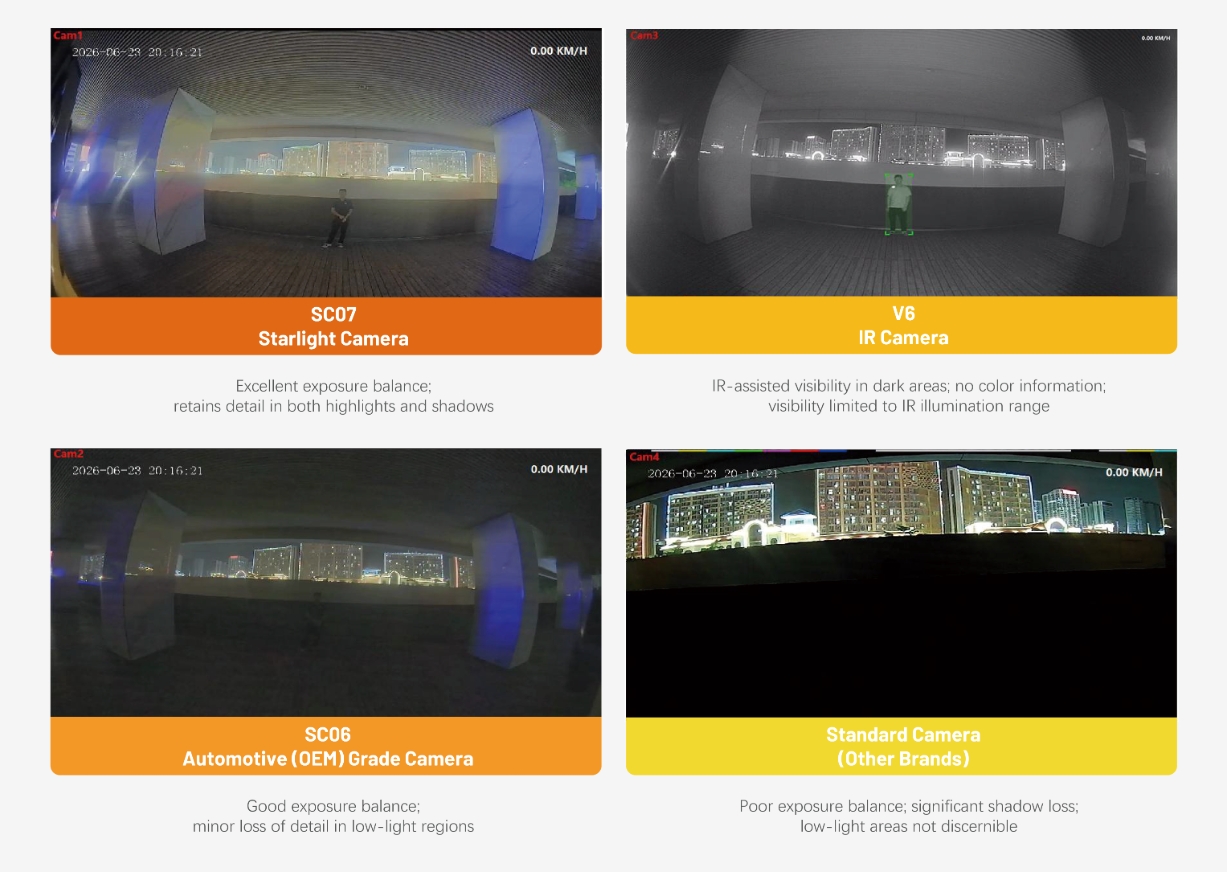
Low-Light Performance (0.21 Lux)

This test compares camera visibility under extremely low-light conditions (0.21 lux), including three Vispect cameras and one standard third-party camera, highlighting differences in low-light imaging performance.

Low-Light Performance Comparison

PERIPHERAL

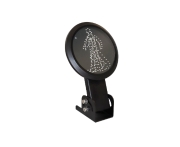
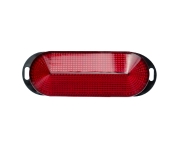
Peripherals are small optional devices connected with the Main Unit to provide additional function such as better GPS signal, audio and visual notice to the driver, or even additional sensor to detect the movement of a excavator. Some peripherals are water-proof while the others are not.


Compatibility

Applicable Scenarios